
What causes failures in a welded joint and how can they be prevented?
Welded joints play a vital role in sectors such as electronics, manufacturing, electrical engineering, refrigeration, and metalworking. However, when the process is not performed correctly, defects can occur that affect the strength, conductivity, and durability of the joint.
Identifying the most common causes of welding failures allows for process optimization, reduced rework, and guaranteed higher quality products.
Why is it important to prevent failures in tin soldering?
A faulty joint can cause problems that go beyond a simple repair. Depending on the application, the consequences can include:
- Premature product failures.
- Loss of electrical conductivity.
- Increased costs due to rework.
- Decreased productivity.
- Operational and safety risks.
For this reason, understanding the factors that influence the quality of tin soldering is key to achieving consistent results.
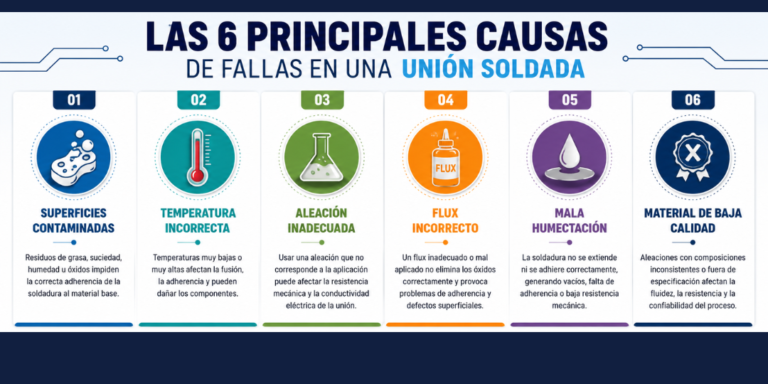
Main causes of failure in a welded joint
1. Contaminated or oxidized surfaces
One of the most frequent problems occurs when the surfaces to be joined have residues of grease, dirt, moisture or oxides.
These contaminants hinder the proper adhesion of the weld to the base material, resulting in weak or irregular joints.
How to prevent it?
- Clean the surfaces properly before welding.
- Remove traces of rust or corrosion.
- Store materials under appropriate conditions to avoid contamination.
2. Inadequate temperature during the process
Temperature is one of the most important factors in any welding process.
When the temperature is insufficient, the solder may not melt properly or adhere evenly. Conversely, excessive heat can damage sensitive components, alter the material’s properties, or create defects in the joint.
How to prevent it?
- Use properly calibrated equipment.
- Respect the recommended temperature ranges for each alloy.
- Control the time of exposure to heat.
3. Incorrect selection of tin solder
Not all alloys are suitable for all applications.
Factors such as the base material, operating conditions, required strength, and applicable regulations should be considered when selecting the welding material.
An incorrect choice can affect both the mechanical performance and the electrical conductivity of the joint.
How to prevent it?
- Evaluate the specific requirements of the application.
- Select the appropriate alloy according to the process.
- Review the technical data sheet for each tin solder.
- Consult with specialized providers when technical doubts arise.
4. Improper use of flux
Flux plays a fundamental role during welding: it helps to remove oxides and facilitates the correct wetting of the material.
When an insufficient amount or an unsuitable type of flux is used, adhesion problems and surface defects may occur.
How to prevent it?
- Use the flux recommended for each application.
- Verify its compatibility with the alloy used.
- Ensure uniform application throughout the process.
5. Poor welding wettation
Wetting is the ability of molten weld to spread and adhere properly to the metal surface.
When wetting is deficient, the joint may present voids, lack of adhesion or low mechanical resistance.
How to prevent it?
- Keep surfaces clean.
- Use the appropriate temperature.
- Use quality materials that are compatible with each other.
6. Low quality or out-of-specification materials
The quality of the alloy used directly influences the performance of the welded joint.
Materials with inconsistent compositions or outside of established standards can affect the flowability, strength, and reliability of the process.
How to prevent it?
- Acquire materials from reliable suppliers.
- Verify compliance with quality standards.
- Demand technical and safety data sheets for tin soldering and fluxes.
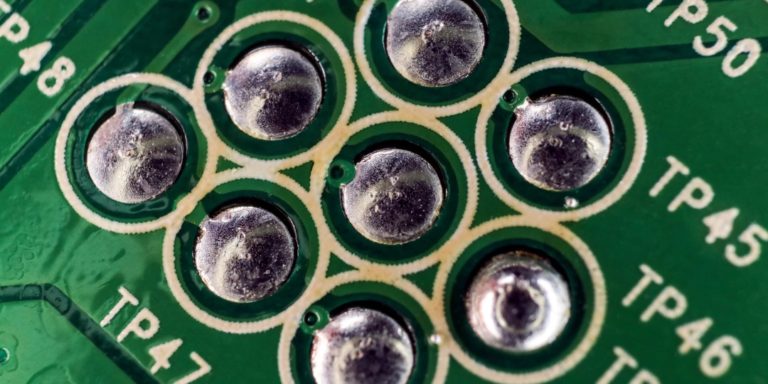
How to identify a defective welded joint?
Some signs that may indicate problems with welding are:
- Dull or irregular appearance.
- Crack formation.
- Visible porosities.
- Excess waste.
- Lack of adherence.
- Detachment from the union.
- Poor conductivity in electrical applications.
Early detection of these defects allows the process to be corrected before it affects the quality of the final product.
Best practices for achieving reliable welded joints
In addition to avoiding the most common mistakes, it is advisable to follow some practices that contribute to improving the quality of the process:
- Keep the equipment in optimal condition.
- Train the personnel in charge of welding.
- Use certified materials.
- Control the process variables.
- Periodically check the quality of the joints made.
The combination of appropriate procedures and quality materials is key to obtaining consistent results.

The importance of using tin solders manufactured under quality standards
Selecting a reliable welding process is just as important as correctly executing the process.
Working with alloys manufactured under recognized standards helps to ensure material consistency, stability of properties, and repeatability of results.
At Conalsol, we manufacture our tin solders under ASTM and ICONTEC standards, offering solutions for industrial, electrical, and electronic applications that require quality and reliable performance.
Conclusion
Failures in a welded joint are usually related to factors such as surface cleanliness, process temperature, alloy selection, flux use, and the quality of the materials used.
Identifying these factors and applying good welding practices allows for reducing defects, improving productivity, and ensuring stronger and more durable joints.
At Conalsol, we offer tin solders manufactured according to ASTM standards for various industrial applications. All our products are delivered with a technical data sheet and a safety data sheet (SDS). If you are looking to optimize your soldering processes and reduce quality issues, our team can advise you on selecting the most suitable solution for your needs.