
Alloys
Used in the manufacture of hardware, jewelry, costume jewelry, the automotive sector and the coating of industrial equipment due to their durability and excellent aesthetic finish.
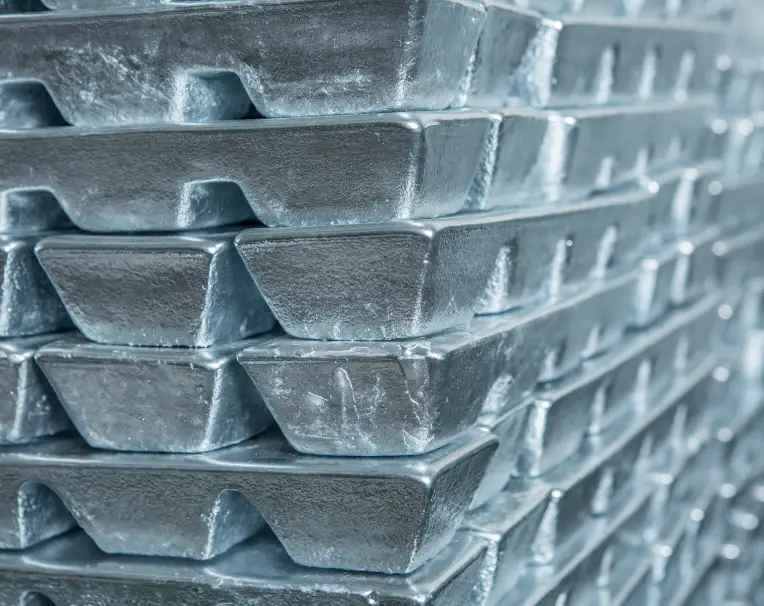
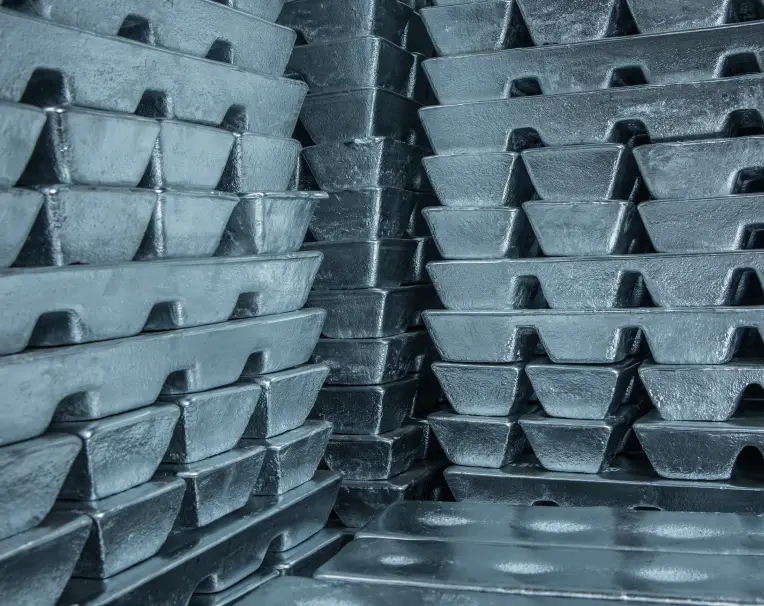
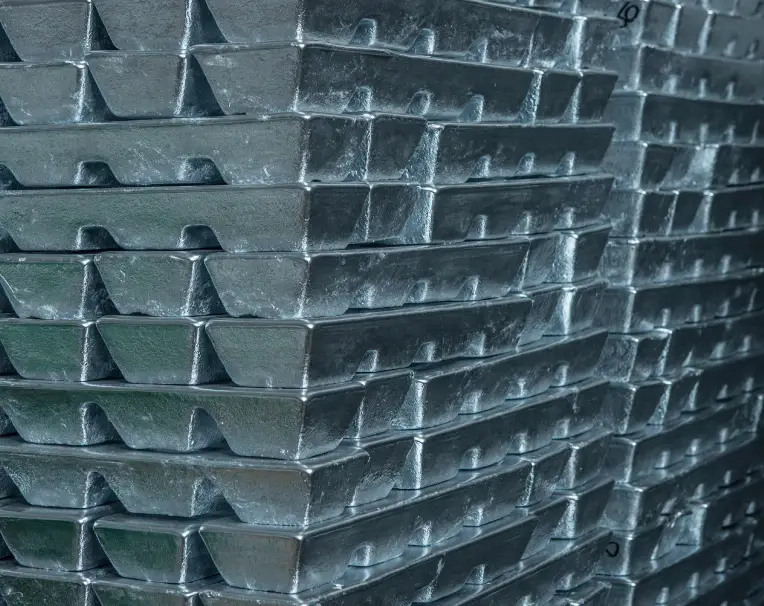
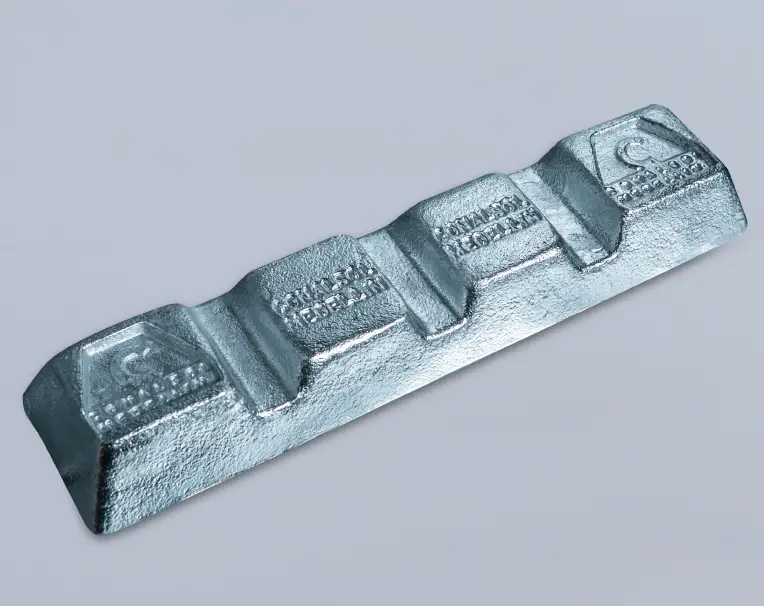
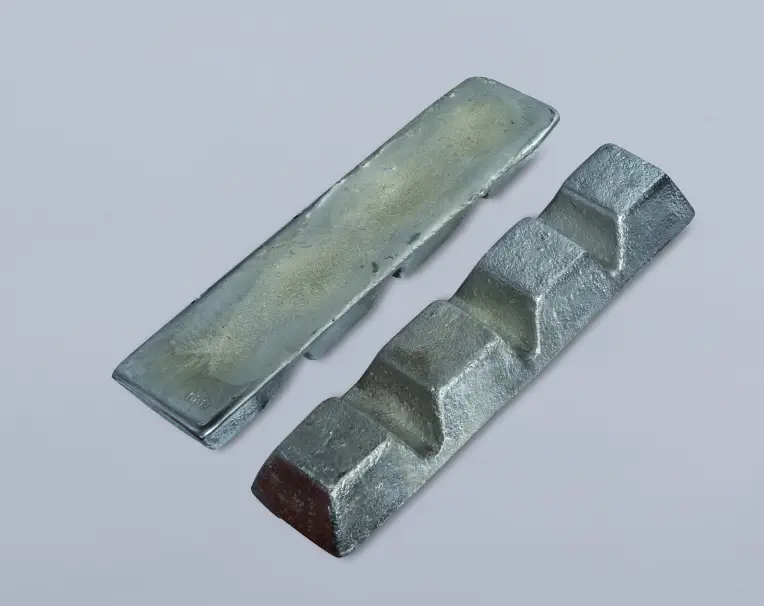
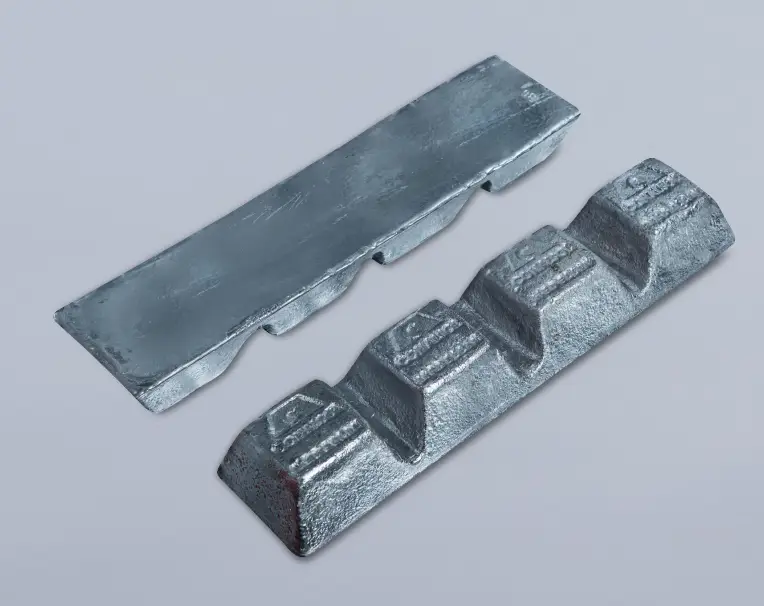
Zamac injection and centrifugation
It is an alloy of zinc, aluminum, magnesium, and copper. These alloys are highly sensitive to impurities, especially tin, lead, and cadmium. For this reason, we exclusively use 99.995% pure Special High Grade Zinc, along with pure aluminum and magnesium, and electrolytic copper, thus guaranteeing its highest quality.
Presentation: Ingots of approximately 7 kg.
Benefits
• Aluminum improves mechanical properties and hardness, as well as increasing the alloy’s fluidity.
• Copper contributes to greater tensile and corrosion resistance, as well as increased hardness. However, it can reduce the alloy’s dimensional stability, making it susceptible to aging.
• Magnesium, although added in small proportions (0.1% to 0.15%), provides significant stability. Being more electronegative than zinc, it effectively inhibits intergranular corrosion, a common phenomenon in this type of alloy.
References
• Zamac 410 ( Zamac 5). For injection.
• Zamac 400 (Zamac 3). For injection.
• Zamac 430 (Zamac 2). For centrifugation.
• Zamac 431. For centrifugation.
• Zamac 331. For centrifugation.
Pewter
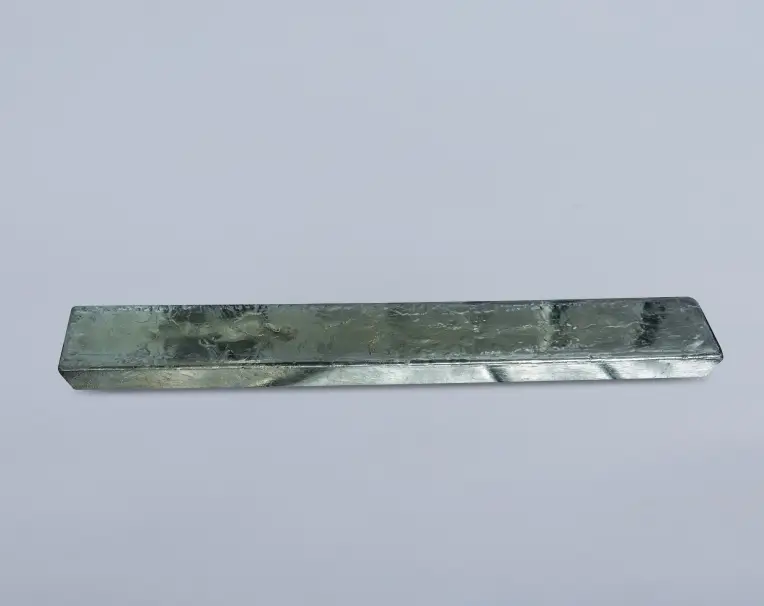
This high-tin alloy is widely used in jewelry making due to its exceptional properties. It is characterized by its low melting point, excellent fluidity, and optimal performance in electroplating processes.
The antimony incorporated into its composition significantly improves casting properties and provides a substantial hardening effect. Furthermore, this alloy can be manufactured lead-free, meeting regulatory and environmental requirements.
We manufacture this alloy according to international standards ASTM B102, ASTM B560 and BS 5140, guaranteeing quality and reliability in every batch.
Presentation: Ingots of approximately 7 kg.
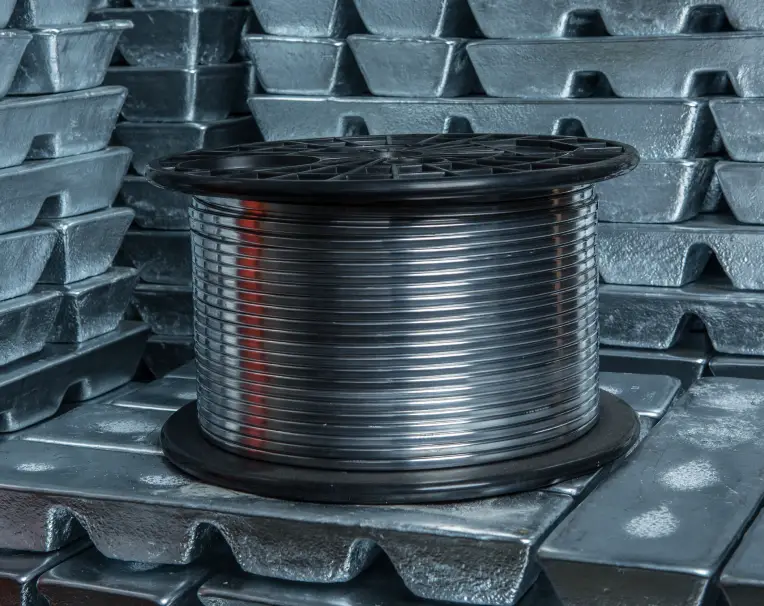
High, medium, and low Babbitt
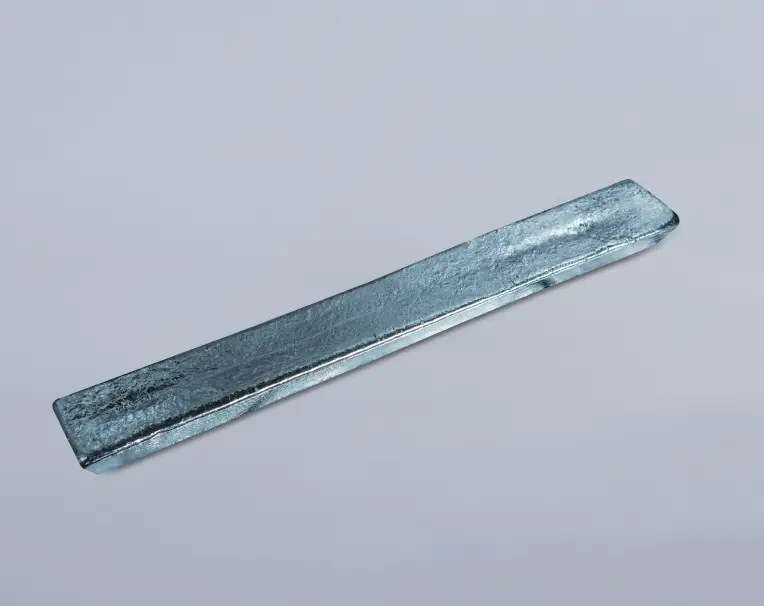
Babbitt is a metallic alloy, typically tin- or lead-based, used as an antifriction material in bearings. It is applied as a thin surface coating over a steel or bronze structure, providing a smooth contact surface to reduce friction between moving parts.
It can be applied by casting, centrifuging, or welding.
Presentation:
• Ingots weighing between 7 and 10 kg.
• Solid wire gauges: 1/16, 3/32, 5/32 and 1/8.
Uses
• Friction bearings: Babbitt is used as a contact layer in bearings because it effectively reduces friction, wear, and heat generation between moving parts.
• Heavy industries: It is used in industrial machinery, especially in bearings, large equipment bearings, cam bushings, and shaft and sleeve linings. Its use is common in sectors such as cement, steel, chemical, and petroleum.
• Demanding environments: given its resistance to corrosion and wear, Babbitt is ideal for operating in harsh industrial conditions.
References:
• Low Babbitt: B6 to B10, grade 7 to 15.
• Babbitt media: B55 and related products.
• High Babbitt: B80 and B90, grade 1 to 11.
• Babbitt wire: ASTM grade 2, gauges 1/16, 3/32, 5/32 and 1/8.
Alloys for hot-dip galvanizing
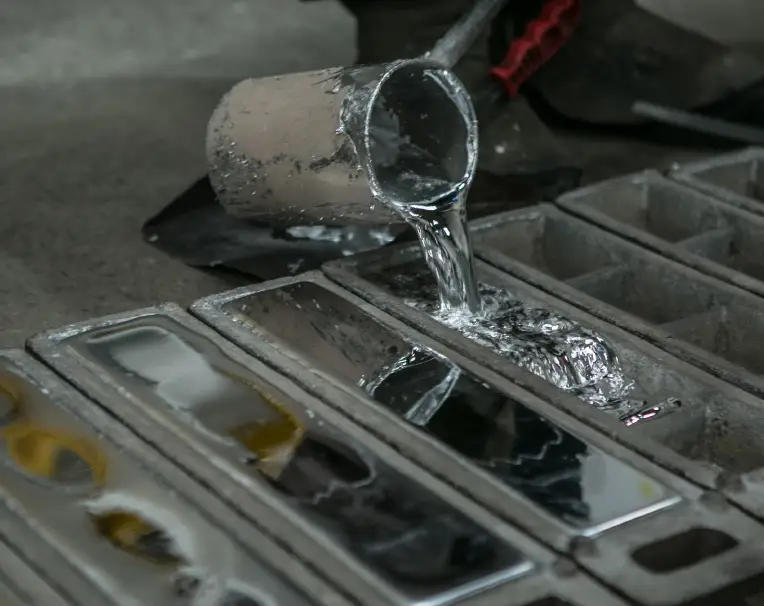
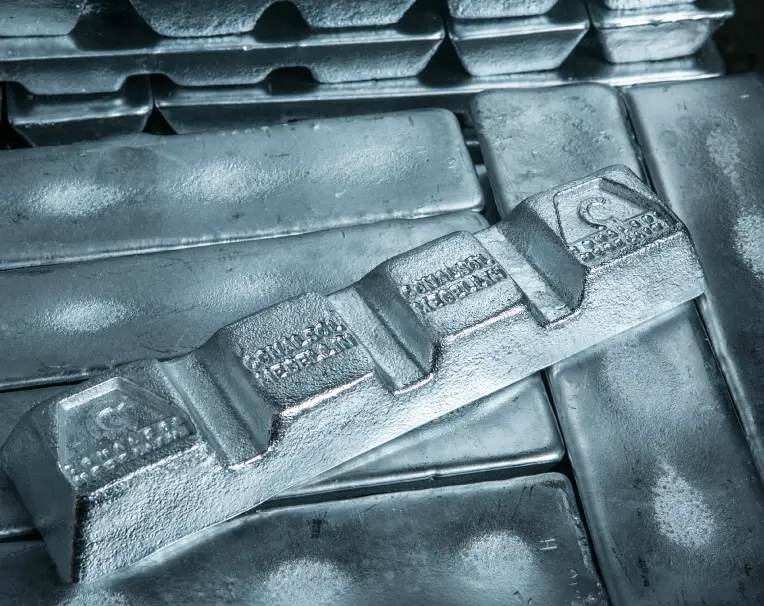
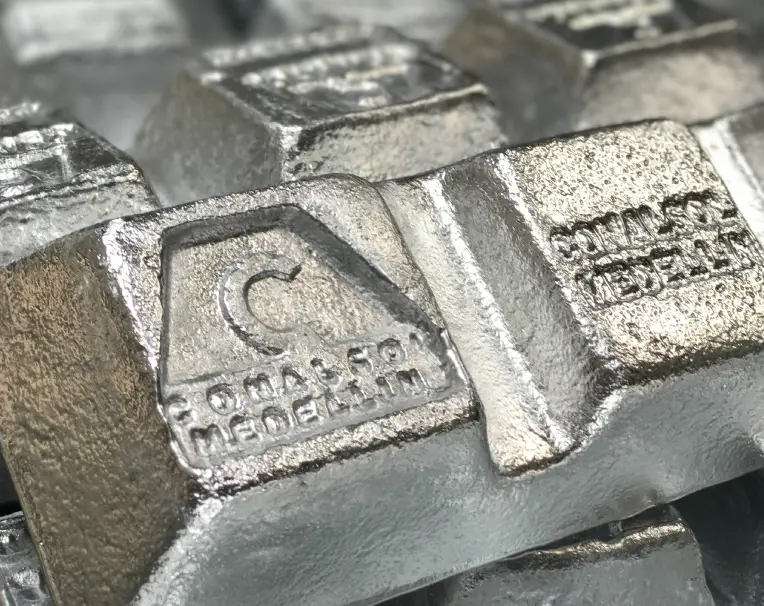
We formulate and produce special zinc alloys designed to optimize the hot-dip galvanizing process. Our alloys improve bath flowability, reduce zinc consumption, promote a more uniform and glossy coating, enhance drainage, and minimize defects such as spangles, spines, and rough edges. Each component fulfills a specific function: from stabilizing the intermetallic layer to facilitating drainage and improving the surface finish.
References:
- Zinc/Antimony
- Zinc/Aluminum
- Zinc/Aluminum/Bismuth
- Zinc/Aluminum/Bismuth/Tin
- Custom Alloys