
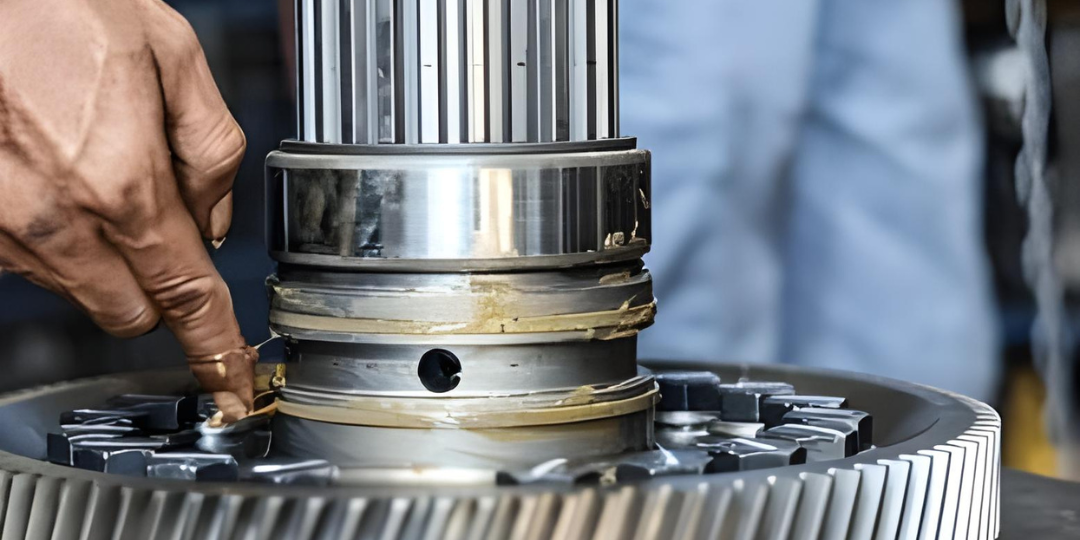
Babbitt: the key alloy for protecting shafts and heavy industrial machinery
In cement, sugar, paper, mining, or power generation plants, a bearing failure is rarely an isolated problem: it halts entire production lines. These industries operate large rotating equipment—turbines, mills, high-power electric motors, centrifugal pumps, gearboxes—that run continuously under demanding loads, often 24 hours a day. Behind most of the plain bearings that support this equipment is a metal alloy that protects shafts and sleeves: Babbitt.
The effects of choosing an unsuitable Babbitt alloy typically appear gradually: the shaft heats up slowly, the bearing loses grip, or wear accelerates under loads the alloy wasn’t designed to withstand. Therefore, understanding which type and grade of Babbitt alloy is right for each piece of equipment is a technical decision, not just one of availability or price.
What is the Babbitt?
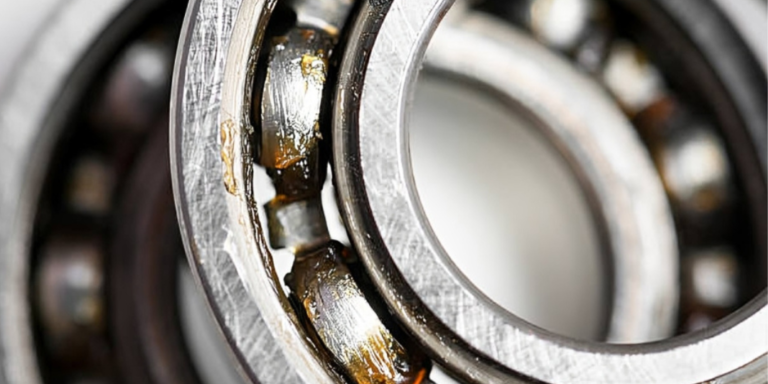
Babbitt metal (or antifriction metal) is a soft alloy—tin- or lead-based—applied as a thin coating over a steel or bronze support structure. Its function is not to bear weight itself, but to provide a smooth contact surface between the moving shaft and the bearing body, reducing friction and absorbing small particles or misalignments before they can damage the shaft.
Structurally, Babbitt is made up of hard crystals of metallic compounds dispersed in a softer matrix. As the bearing wears, this soft matrix softens slightly, leaving channels through which the lubricant circulates between the hard points that actually bear the load. This behavior is what gives Babbitt its ability to absorb contamination and minor misalignment without damaging the shaft, something harder materials cannot achieve.
Tin Babbitt vs. Lead Babbitt
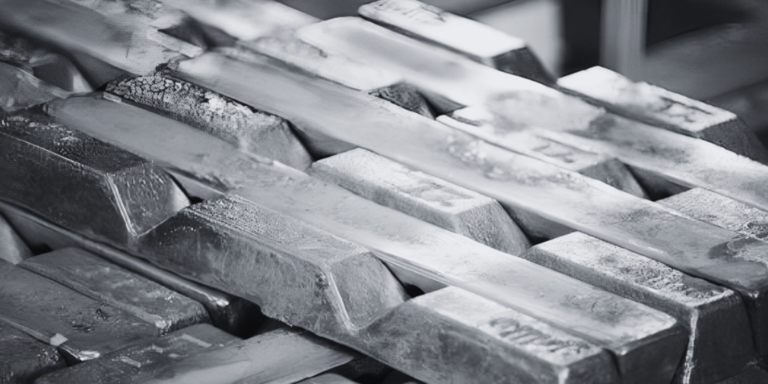
The first decision when selecting a Babbitt reel is the base metal alloy. Both families serve the same purpose, but their performance varies depending on speed, load, and budget.
Tin Babbitt
It is the highest-performing alloy, with a tin content that typically exceeds 80-90%, along with antimony and copper. It is characterized by:
- Greater corrosion resistance and better bonding capacity with the base metal.
- Good performance at higher temperatures and less tendency for its components to segregate.
- Improved performance under cyclic loads and high speeds.
For these reasons, tin Babbitt is the preferred choice in compressors, large electric motors, turbines, and heavy machinery in general, where speed and mechanical demands are high and failure is costly.
Lead Babbitt
Here, lead makes up the majority of the alloy (usually 65-80%), combined with antimony and a smaller proportion of tin. Its main advantages are:
- Significantly lower cost than Tin Babbitt.
- Good performance in low-speed and low-load applications.
- Less tendency to scratch or mark the axis.
Its weakness is fatigue: under intense impact or cyclic loads, lead-based Babbitt performs worse than tin-based Babbitt and is more prone to segregation of its components over time. It is typically reserved for auxiliary equipment, less demanding industrial applications, or repairs where cost is a more important factor than maximum performance.
Babbitt grades: high, medium, low, and wire
Within each family (Tin or Lead), Babbitt is classified into grades according to its exact composition and the level of mechanical stress it can withstand. Although trade names vary among manufacturers, it is helpful to think of them in four categories:
High-grade Babbitt
With the highest tin (or lead, depending on the family) content and a more controlled proportion of antimony and copper, it offers superior load-carrying capacity, heat resistance, and performance at high speeds. It is the natural choice for main turbine bearings, large electric motors, compressors, and critical rotating equipment where unscheduled downtime is costly.
Middle grade Babbitt
A balance between performance and cost. It supports moderate loads and speeds and is commonly used in gearboxes, centrifugal pumps, industrial fans, and drive shafts that do not operate under extreme conditions but do require reliable shaft protection.
Low-grade Babbitt
Designed for light loads and low speeds. It is more economical and sufficient for auxiliary equipment, less critical machinery, or applications where the limiting factor is not mechanical strength but cost per unit. Using it in demanding equipment accelerates wear and reduces bearing life.
Babbitt-in-wire
This is not a different level of requirement, but rather a way of presenting the material, designed for specific application methods:
- Flame spray metallization: used to coat surfaces or rebuild worn bearings without the need to melt large volumes of material.
- On-site repairs: allows Babbitt layers to be replaced directly on the equipment, without completely disassembling it, which is valuable when a prolonged shutdown is not feasible.
Babbitt wire is usually manufactured in the same alloy grades as the ingot material, so the choice of grade (high, medium, or low) is made in the same way; the wire only defines how that alloy will be applied.
How to choose the right Babbitt?
The appropriate selection depends on three variables that must be evaluated together, not separately:
- Load on the bearing: the greater the load, the greater the need for a high grade and, generally, a tin base.
- Shaft speed: High speeds generate more heat and require alloys with good thermal conductivity and fatigue resistance.
- Operating temperature: equipment that works in hot environments (ovens, dryers, continuous process lines) requires temperatures with better thermal stability.
A common mistake is choosing a Babbitt bearing solely based on shaft diameter or what has “always been used” in the plant, without checking if load and speed conditions have changed over time—for example, after an increase in production capacity. Reviewing these variables before refurbishing a bearing prevents premature failures and unplanned downtime.
Applications in shaft coatings, sleeves and heavy machinery
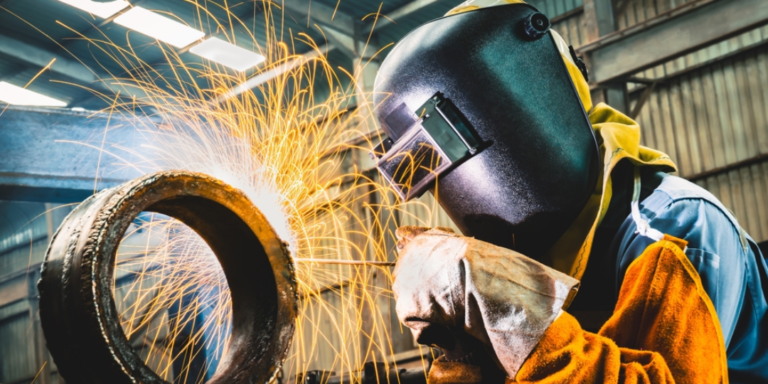
Babbitt is applied to the base metal using three main methods, depending on the size of the component and whether it is a new manufacture or a repair:
- Direct casting: the traditional method for making new bearings or lining complete sleeves, pouring molten Babbitt onto the steel or bronze support.
- Centrifugation: produces a more uniform and denser layer, used in precision bearings for demanding rotating equipment.
- Welding or spraying (using wire): ideal for field repairs or partial rebuilding of worn surfaces, without needing to replace the entire component.
These techniques allow Babbitt to protect both complete main bearings and shafts and sleeves of rotating equipment in sectors such as cement, sugar, paper, power generation and mining, where machinery operates continuously and unscheduled stops have a direct impact on production.
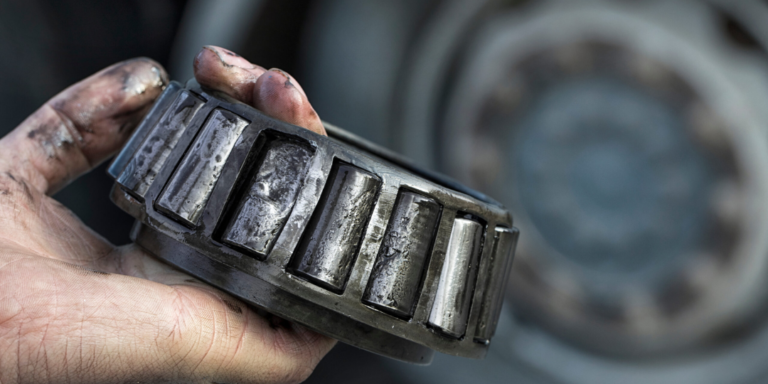
Signs that a Babbitt bearing needs overhaul
Detecting Babbitt wear early prevents unscheduled downtime and further damage to the shaft. Some warning signs that warrant inspection include:
- Sustained temperature increase in the bearing without changes in load or lubrication of the equipment.
- Abnormal vibration or new noise in the shaft, which may indicate loss of adhesion between the Babbitt and its support.
- Metallic particles in the lubricating oil , a sign that the Babbitt layer is peeling off.
- Increasing clearances in the shaft, detected during routine maintenance.
- Recent changes in operating conditions , such as an increase in equipment capacity or speed, may render the originally installed Babbitt grade obsolete.
In the event of any of these signs, it is advisable to assess whether the bearing requires a local repair (by welding or wire metallization) or a complete relining, and to take advantage of the inspection to confirm whether the installed Babbitt grade is still suitable for the current conditions of the equipment.
Conclusion
Babbitt alloy remains one of the most reliable solutions for protecting shafts and bearings in heavy industrial machinery. The difference between a repair that lasts for years and one that fails in months almost always comes down to two decisions: choosing the correct metal base (tin or lead) and the appropriate grade for the equipment’s actual load, speed, and temperature.
At Conalsol, we evaluate the operating conditions of each application before recommending a Babbitt alloy. We offer Babbitt in ingot and wire form for manufacturing, repair, and maintenance processes of industrial components. If you have any questions about which grade of Babbitt your equipment requires, contact us and receive the technical support you need to select the most suitable material for your processes.