
How to choose the right tin solder according to the industrial application
The quality of a tin solder joint depends on several factors, including the base material, working conditions, and the type of alloy used. Choosing the right tin solder not only influences the strength and durability of the joint but also the efficiency of the process and the quality of the final product.
In sectors such as electronics, manufacturing, refrigeration, plumbing, and metalworking, using the wrong alloy can lead to premature failures, rework, and higher operating costs. Therefore, understanding the selection criteria is essential for achieving reliable results.
Why is it important to choose the right welding equipment?
Tin solder acts as the joining element between two or more components. Its performance must be compatible with the mechanical, thermal, and environmental requirements of the application.
A suitable selection allows:
- Improve the strength of the bond.
- Reduce defects during the process.
- Optimize production times.
- Ensure electrical conductivity when required.
- Increase the lifespan of the components.
Conversely, an unsuitable choice can lead to problems such as cracks, weak joints, premature corrosion, or product malfunctions.
Key factors for selecting an industrial tin solder
-
Materials that will be joined
The first aspect to consider is the type of metal or alloy to be welded. Materials such as copper, brass, steel, and other non-ferrous metals may require specific alloys to ensure proper adhesion and performance.
-
Operating temperature
Each weld has a specific melting range. Evaluating both the process temperature and subsequent operating conditions is essential to ensure joint stability.
-
Mechanical requirements of the application
Some applications require resistance to vibration, mechanical stress, or constant thermal cycling. The alloy composition directly influences these properties.
-
Electrical conductivity
In electronic applications, electrical conductivity and junction reliability are critical factors to ensure the proper functioning of the equipment.
-
Environmental regulations and requirements
More and more industries are seeking solutions that meet quality standards and environmental regulations, driving the use of lead-free solders in multiple applications.
Types of welding and their industrial applications
Tin-Lead Solders
Tin-lead solders continue to be one of the most widely used options in the industry thanks to their excellent flowability, ease of application, and reliability in various metal joining processes.
Solid Tin Solders (without resin core)
Solid welds are especially suitable for industrial processes where the flux is applied separately or is part of the production system.
They are frequently used in automated manufacturing lines and in operations requiring uniform deposition of filler material onto metal surfaces. They are also a widely used solution for joining and protecting electrical conductors, sheet metal forming, and automotive applications, where process consistency is a key factor.
Thanks to their versatility, these alloys allow for efficient work in continuous and high-volume production environments.
Resin-core tin solders
In this type of welding, the flux incorporated into the core facilitates the removal of oxides during the process, promoting better adhesion and joint quality.
For this reason, they are widely used in the assembly of electronic devices, the manufacture and repair of printed circuit boards, the installation of electrical connectors, and the maintenance of equipment that requires a high level of precision.
Their ability to simplify the soldering process makes them a particularly valued alternative in electronic and electrical applications.
Lead-free tin solders
Lead-free solders have gained prominence in recent years due to the sustainability, safety and regulatory compliance requirements present in various industrial sectors.
Among the most commonly used alternatives are Tin-Silver and Tin-Antimony alloys, each with particular characteristics that may be more convenient depending on the application requirements.
Tin-Silver Solders
The addition of silver improves the mechanical strength of the joint and contributes to obtaining high-quality finishes, especially in applications where durability and corrosion resistance are important factors.
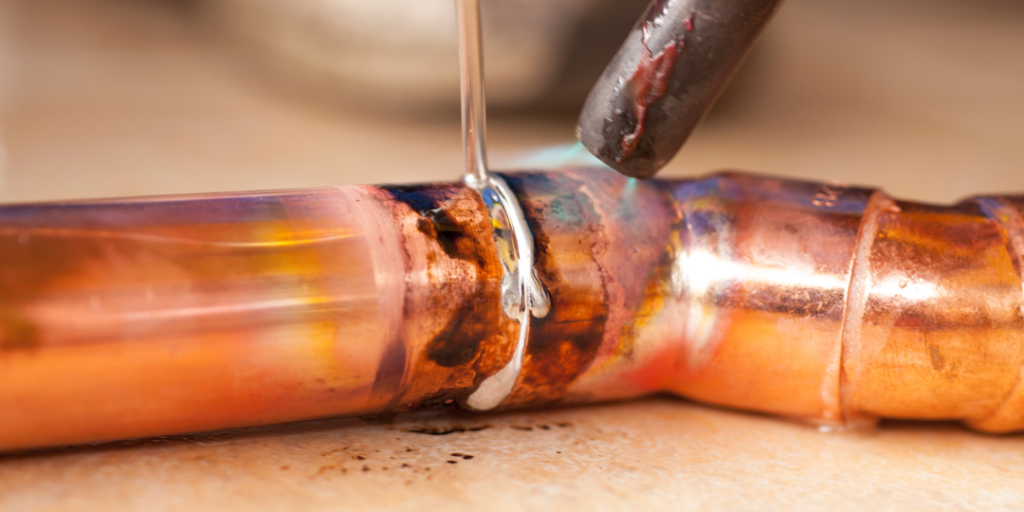
These characteristics make it a common alternative in potable water systems, thermal systems, and copper pipe joining processes. It is also a widely used option in industries where hygiene and material safety are paramount, such as food and beverage production.
Tin-Antimony Solders
Tin-antimony alloys are characterized by offering good structural strength and stability against temperature variations, making them a reliable solution for fluid conduction and distribution systems.
Their performance makes them especially suitable for applications related to hydraulic networks, heating and cooling systems, and copper capillary connections. Furthermore, they represent a widely used lead-free alternative when regulatory compliance and operational efficiency are required.
Quality and regulatory compliance: factors that must also be considered
In addition to selecting the appropriate alloy, it is important to verify that the material meets recognized manufacturing and quality standards.
At Conalsol, we manufacture our welding products under international ASTM and ICONTEC standards, guaranteeing the consistency of the chemical composition, the product performance, and the reliability required by different industrial sectors.
Working with certified materials allows for the reduction of operational risks, the improvement of joint quality, and the assurance of repeatability in production processes.
How to make the best decision?
The selection of a weld should take into account the base material, the working temperature, the mechanical requirements, the conductivity, and the applicable regulations.
Analyzing these factors will allow us to identify the most suitable alloy for each process and optimize both the quality and productivity of the operation.
Conclusion
Choosing the right tin solder is a decision that directly impacts process efficiency, joint quality, and the lifespan of finished products. Factors such as the material being joined, the operating temperature, mechanical requirements, and regulatory standards must be analyzed together to select the most suitable alloy for each application.
Not all applications require the same welding process or face the same operating conditions. Proper selection can help improve productivity, reduce rework, and ensure more reliable results in the long run.
At Conalsol we manufacture Tin-Lead Solders and Lead-Free Solders under ASTM and ICONTEC standards, offering solutions for sectors such as electronics, the electrical industry, refrigeration, plumbing and manufacturing.
If you’re looking for the most suitable welding material for your process, our team can advise you on selecting the alloy that best meets your technical and production requirements. Contact us and discover how to optimize your operations with materials manufactured to high quality standards.