
Copper: the metal that conducts the current and protects the part in electroplating
Copper is a metal that doesn’t usually stand out at first glance; however, it’s a key component behind numerous industrial processes. In electroplating, it fulfills two distinct and complementary roles: as a wire, it conducts the electric current that makes the process possible; as an anode, it’s the source of the metal that coats and protects the parts. In this article, we’ll review both roles, as well as some little-known history about this metal.
Why copper is the king of electrical conductivity
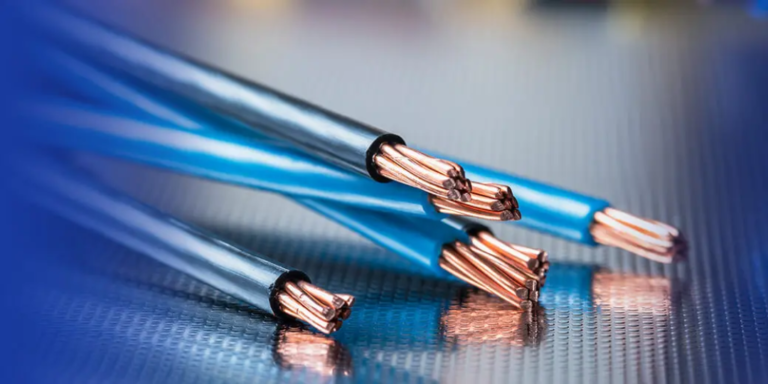
Among commonly used metals, only silver conducts electricity better than copper—but it does so at a much higher cost. Copper offers approximately 97% of silver’s electrical conductivity at a fraction of the price, making it the most efficient choice for any application requiring reliable current transmission. Its malleability (it can be drawn into very fine wires without losing its properties) and natural corrosion resistance ensure electrical stability even in humid or chemically exposed environments.
From ancient trade to modern industry: the history of copper
Copper is one of the first metals that humanity learned to work with, so much so that it gave its name to an entire period of history: the Copper Age, more than 5,000 years ago. Its use as currency has equally ancient roots: civilizations like ancient Egypt and imperial China used it as a medium of exchange, and this tradition continues to this day with coins like the famous American penny, which for much of its history was practically pure copper. An additional interesting fact: copper has natural antimicrobial properties, which is why it is used today on hospital surfaces to inhibit bacterial growth.
From copper wire to plated part: its role in electroplating
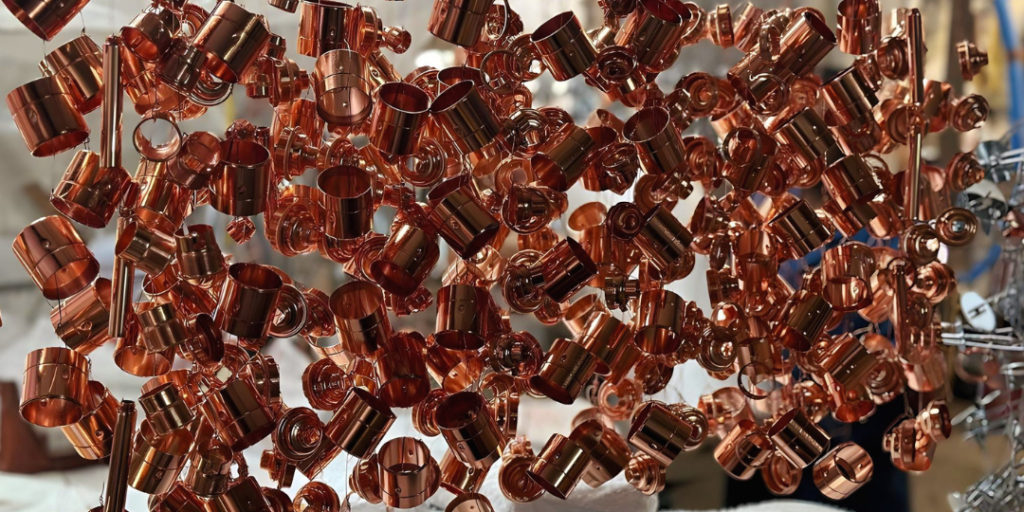
In electroplating processes, copper wire is not deposited as a coating: its function is different but equally critical. It acts as a conductor that carries the electric current from the power source to the parts immersed in the bath—either directly or through hooks, baskets, or bus bars—allowing the electrochemical reaction to occur that deposits the metal (zinc, nickel, chromium, copper itself, etc.) onto the surface.
Wire quality matters more than it seems. Insufficient gauge or wire with reduced conductivity causes voltage drops in the circuit, meaning some parts receive less current than others within the same plating bath. The result is uneven coating: parts with thicker layers near the connection point and thinner layers at the ends. Furthermore, copper’s resistance to oxidation is key: oxidized wire or wire with poor contact points increases the circuit’s electrical resistance and compromises the stability of the entire process. Therefore, even though the wire isn’t part of the final product, its quality directly determines the consistency and quality of the coating on each batch of parts.
Copper as an anode: the basis of electroplating
Just as a wire conducts electricity, the copper anode is the source of the metal that actually coats the piece. During the process, the copper from the anode is dissolved in a controlled manner in the electrolytic bath and deposited onto the piece (the cathode), forming a layer that improves its appearance, corrosion resistance, and conductivity. Because of this versatility, copper is considered the base metal par excellence in electroplating, used both as a final coating on decorative pieces and as an intermediate layer before applying other metals.
Electrolytic copper vs. phosphor copper: which one to use depending on the bath?
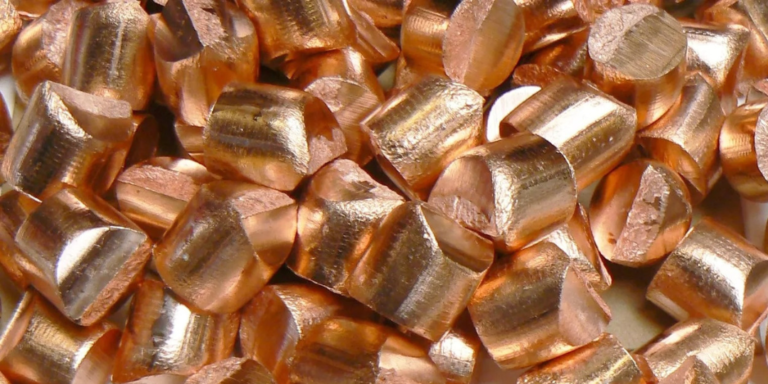
Not all copper anodes are the same, and choosing the right one depends directly on the type of bath:
- Electrolytic copper (purity greater than 99.9%): This is the ideal choice for alkaline baths, such as those containing cyanide, pyrophosphate, or fluoroborate. Its high purity ensures a stable solution and a uniform deposit, making it perfect for applications where finish quality is critical.
- Phosphorous copper (with a controlled phosphorus content, typically between 0.02% and 0.08%): This is specifically designed for acidic copper sulfate baths. The phosphorus forms a thin film on the anode surface that regulates its dissolution, preventing copper particles from detaching and forming “anodic sludge” that would contaminate the bath. This results in a cleaner process and a more consistent coating.
Using the wrong type of anode—for example, pure copper in an acid bath—can lead to uneven dissolution, increased bath maintenance, and visible defects in the final coating. Therefore, beyond purity, the specific anode composition must be matched to the process.
A metal with a dual function, both essential
Whether carrying current through a wire or dissolving in a controlled manner as an anode, copper is a rarely seen component, but without which no electroplating process works as it should.
Does your electroplating process require high-quality copper wire or anodes? At Conalsol, we offer electrolytic and phosphor copper for your plating baths, along with technical advice to help you choose the right product. Contact us for a quote on your next order.