
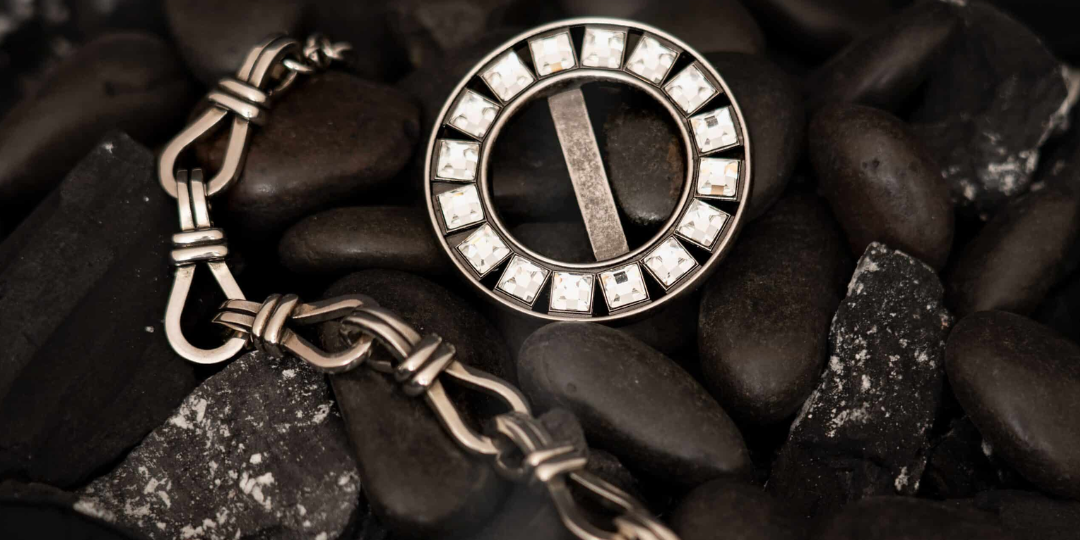
Zamac in fashion, footwear and leather goods: uses by industry and which alloy applies
The production of fashion accessories, footwear, and leather goods relies heavily on small metal parts: buckles, clasps, rivets, rings, buttons, and decorative hardware. Most of these parts are made of Zamac, a zinc alloy produced by die casting, allowing for high-volume production with consistent finishes. This article examines how Zamac is used in each of these industries and, finally, the differences between the two most common alloys within this family: Zamac 3 and Zamac 5.
Zamac in footwear
In footwear, metal components serve both aesthetic and functional purposes. Toe caps, embellishments, and die-cut logos define much of a shoe’s visual identity, while strap buckles, lacing hooks, and heel hardware are subjected to direct stress every time the shoe is worn. Zamac is well-suited to both applications because it allows for the precise reproduction of fine reliefs and engravings, while also providing the necessary strength for components that endure repeated loads throughout the shoe’s lifespan.
Another relevant factor is weight: in footwear, any metallic component must contribute the least possible weight without compromising strength, something that Zamac fulfills better than other metals commonly used in the industry such as solid brass.
Zamac in leather goods
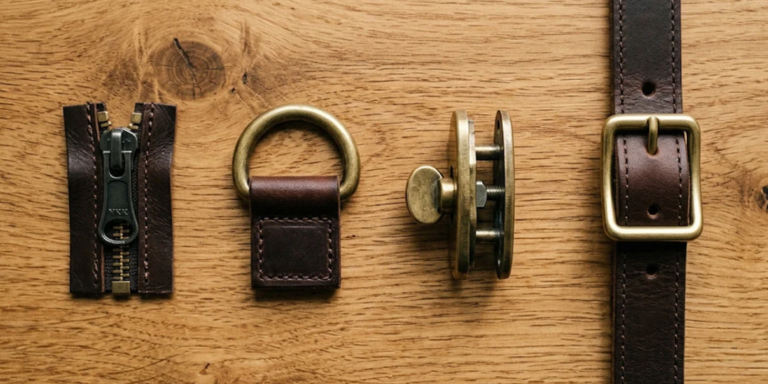
In leather bags, straps, and accessories, Zamac is primarily used for functional hardware: carabiners, D-rings, swivel hooks, and buckles. Unlike other industries, in leather goods these parts are subjected to intensive mechanical use—they are opened, closed, and tightened hundreds of times—so their resistance to metal-on-metal friction wear is a key factor in the choice of manufacturing process.
There is also an important decorative line: ornamental rivets, brand plates and charms, where the criteria shift towards surface finish and coating quality (gold, silver, copper), rather than mechanical resistance.
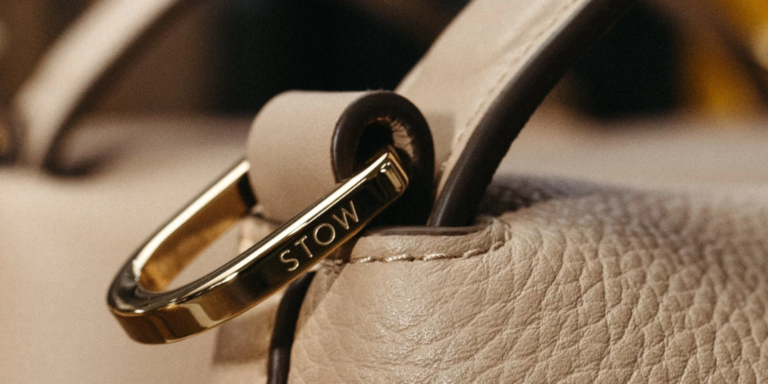
Zamac in fashion and accessories
In costume jewelry, metal buttons, belt buckles, and clasps, the primary requirement is visual: a uniform coating shine, crisp engraving, and a smooth, non-porous surface. These factors determine whether an accessory is perceived as a quality product, regardless of its mechanical function, which is minimal in most of these pieces.
This category also has the highest design turnover: collections change frequently, requiring molds that can be adjusted or replaced quickly and an alloy that maintains consistent finish between different batches.
Zamac in decoration
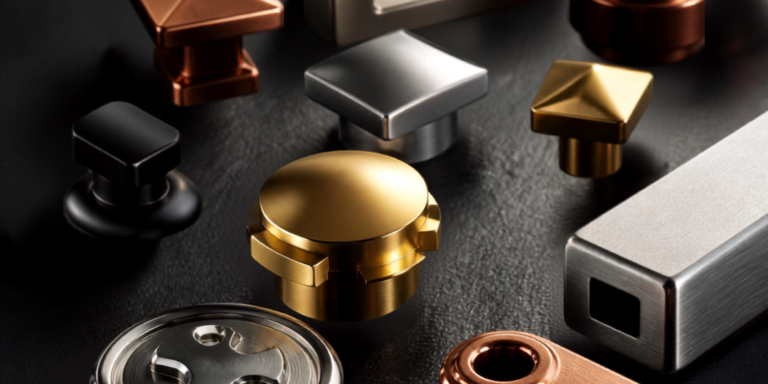
In furniture fittings, handles, wall sconces, and lamp bases, Zamac allows for the creation of complex ornamental forms—reliefs, curves, textures—that would be far more expensive to produce in solid brass or cast iron. Most of these pieces do not bear permanent structural loads, although there are notable exceptions such as hinges for heavy furniture or recessed shelf supports, where loads are transmitted over time.
Zamac 3 vs. Zamac 5: Which one to use depending on the application
Within the Zamac family, the specific alloy used does make a practical difference in the final product. The two most common in these industries are Zamac 3 and Zamac 5, and they differ primarily in two properties: ductility and mechanical strength.
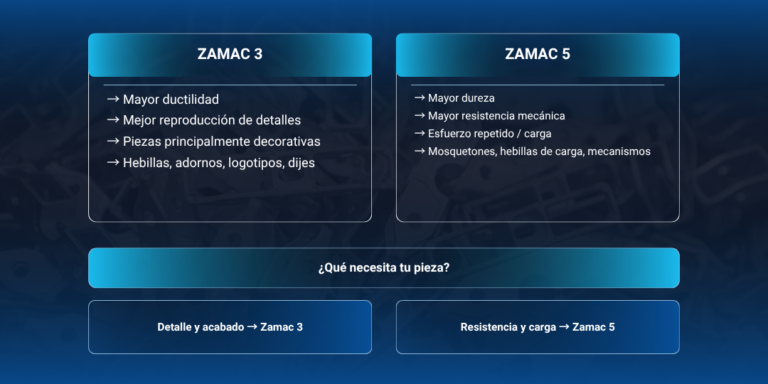
Zamac 3 has greater flowability during casting and higher elongation, resulting in better reproduction of fine details and a lower risk of fracture during stamping or bending processes. It is the most common choice for parts where finish and visual detail are the main criteria.
- Footwear: toe caps, embellishments and decorative logos.
- Leather goods: ornamental rivets, brand plates and charms.
- Fashion and accessories: costume jewelry, buttons and most belt buckles (plated outer casing).
- Decoration: handles, wall sconces and lamp bases without structural load.
Zamac 5 offers greater hardness and tensile strength, at the expense of slightly lower ductility. It is the option to consider when the part is subjected to repeated mechanical stress or sustained load.
- Footwear: buckles on load-bearing straps and heel fittings subjected to constant stress.
- Leather goods: carabiners, cargo buckles and heavy-duty swivel hooks.
- Fashion and accessories: internal locking mechanisms in reinforced belt buckles.
- Decoration: heavy furniture hinges and supports that hold loads in a sustained manner.
Generally speaking, the defining question is not the industry itself, but the specific function of the piece: if its role is primarily decorative, Zamac 3 is usually sufficient and more cost-efficient; if the piece is going to be subjected to repeated stress or sustained load, it is worth evaluating Zamac 5.
Production planning and alloy selection
This time of year sees a significant concentration of footwear, leather goods, and fashion accessory production, with end-of-year collections in mind. Clearly defining the alloy required for each piece from the design stage—and not after manufacturing—helps avoid costly rework when volumes and delivery times are tighter than usual.
If your production is at this stage, it’s worthwhile to have a specialized Zamac supplier who can advise you on the most suitable alloy for each part’s function. At Conalsol, we work under ASTM and ICONTEC standards, with purity control and batch traceability, and offer nationwide delivery in approximately 48 hours.